Introduction
The global condiments market continues to grow rapidly, and Pakistan’s food industry is no exception. Products such as ketchup and mayonnaise are staples in both home kitchens and commercial food production, making efficient processing lines essential for manufacturers targeting quality, consistency, and scale.
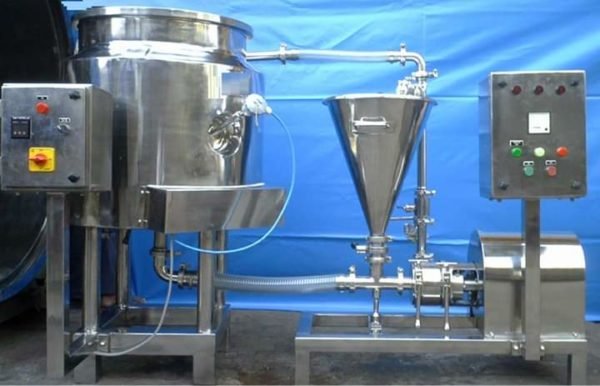
A Ketchup and Mayonnaise Processing Line enables food production facilities to process raw ingredients into finished, packaged condiments with uniform texture, stable shelf life, and food safety compliance. Manufacturers in Karachi, Lahore, Islamabad/Rawalpindi, Faisalabad, Gujranwala, Multan, and Sialkot increasingly invest in automated production systems to meet quality standards and market demand.
This guide explains how ketchup and mayonnaise are processed industrially, the key machinery involved, best practices for production, and why integrated processing lines are crucial for modern condiment manufacturers.
What is a Condiment Processing Line?
A condiment processing line refers to a sequence of interconnected machines that convert raw materials into finished food products such as ketchup and mayonnaise. These lines are designed to handle large volumes while maintaining strict quality, hygiene, and consistency standards.
Whether the product is tomato-based ketchup or oil-emulsion mayonnaise, the production line typically involves:
- Ingredient receiving and pre-processing
- Mixing and emulsification
- Heating or pasteurization
- Homogenization
- Filling and packaging
- Quality control and storage
This system enables high throughput with reduced manual labor and minimal contamination risk.
Tomato Ketchup Processing Line
Tomato ketchup production involves transforming fresh tomato paste into a condiment with the right viscosity, taste profile, and shelf stability. A typical ketchup processing line includes the following stages:
Ingredient Preparation
Fresh tomato paste or puree is received, tested for quality, and prepared with salt, sugar, vinegar, and spices. Some facilities use tomato concentrators to reduce water content.
Mixing and Heating
Ingredients are blended and heated in jacketed cooking kettles or mixers. Controlled heating helps dissolve sugars and spices and ensures microbial safety.
Homogenization
To achieve a smooth, uniform texture, the ketchup base is processed through a homogenizer. A high shear mixer homogenizer (similar to products we offer) improves consistency by breaking down particles.
Filling and Packaging
The finished product is filled into bottles, sachets, or pouches using automated filling machines. Precise dosing equipment ensures uniform weight and presentation.
Quality Assurance
Samples are tested for pH, consistency, color, and microbial safety.
This consistent process is crucial for brands that need stable taste and quality across production batches.
Mayonnaise Processing Line
Mayonnaise is an oil-in-water emulsion, and its processing line focuses on achieving stable emulsification, correct texture, and smooth consistency.
Ingredient Preparation
Egg yolks, vinegar or lemon juice, salt, sugar, and mustard are mixed into a base emulsion. Oil is added gradually to form the emulsion.
High Shear Mixing & Homogenization
A high shear mixer is fundamental in mayonnaise production. It disperses oil droplets uniformly into the aqueous phase to form a stable emulsion. A continuous or batch mixing vessel with variable speed and jacketed temperature control is used to maintain product integrity.
Cooling Control
Mayonnaise production often requires controlled temperature during mixing, as heat can destabilize emulsions.
Filling & Packaging
After quality checks, mayonnaise is sent to automatic filling machines for jars, bottles, or retail containers.
Quality measures include viscosity checks, emulsion stability tests, and sensory evaluations.
Key Machinery in a Condiment Processing Line
A complete ketchup and mayonnaise production line typically consists of the following machines:
Jacketed Mixing & Cooking Tanks
For controlled thermal processing necessary in ketchup production and sometimes in emulsified condiments.
High Shear Mixers & Homogenizers
Used in both ketchup (for smooth texture) and mayonnaise (for stable emulsion). These machines help break down particle sizes and ensure uniform consistency.
Ingredient Feeding Systems
Automated systems that control and meter raw ingredient addition for precision and repeatability.
Pasteurizers & Heat Treatment
To ensure microbial safety and extend shelf life. Ketchup often benefits from controlled heat treatment.
Filling & Capping Machines
Automated fillers that support bottles, jars, and pouches with precise dosing and minimal spillage.
Quality Control Instruments
Viscosity testers, pH meters, and other laboratory tools ensure product quality before packaging.
Production Considerations & Best Practices
Here’s what manufacturers should consider when designing or optimizing condiment processing lines:
Ingredient Quality
Fresh, high-grade tomato puree and food-grade oils and stabilizers improve finished product quality.
Controlled Emulsification
In mayonnaise, unsecured emulsions can separate; a high shear mixing system ensures stability.
Cleaning and Sanitation
Equipment must support easy cleaning, CIP (clean-in-place) systems, and hygiene compliance.
Temperature Management
Jacketed tanks and cooling systems help maintain desired processing conditions.
Production Scalability
Lines should allow scaling up as demand increases without compromising quality.
Benefits of Integrated Condiment Processing Lines
A fully integrated ketchup and mayonnaise processing line offers:
- Consistent product quality
- Reduced manual labor and handling
- Improved food safety compliance
- Energy and operational efficiency
- Reduced processing errors
- Faster throughput
These benefits are especially important for manufacturers targeting both local markets and export markets.
Frequently Asked Questions
What products can be made on a ketchup and mayonnaise processing line?
Tomato ketchup, mayonnaise, salad dressings, flavored sauces, and similar condiments with liquid or semi-solid consistency.
Is a high shear mixer necessary?
Yes. High shear mixers improve texture and stability, particularly in emulsified products such as mayonnaise.
Do you provide machines in major cities?
Yes. Condiment processing lines and related systems are available in Karachi, Lahore, Faisalabad, Islamabad/Rawalpindi, Gujranwala, Multan, and Sialkot.
How is product consistency maintained?
Through controlled mixing, homogenization, temperature control, and quality testing at each stage.
Can this line be customized?
Yes. Production capacity, packaging type, and automation level can be tailored to your facility’s needs.
Conclusion
A Ketchup and Mayonnaise Processing Line is a critical investment for food manufacturers seeking efficiency, quality, and scalability. By combining advanced mixing technology, controlled temperature systems, homogenization, and automated filling, producers can consistently deliver market-ready condiments with reduced waste and improved product performance.
For facilities in Pakistan aiming to modernize their sauce and condiment production, engineered processing lines provide competitive quality and operational flexibility.