Almost every food processing machine is made from stainless steel, and the two grades you will be offered are SS 304 and SS 316. They look the same and both are food-safe, but they do not resist corrosion equally. Picking the wrong one can mean pitting and rust spots within a few years, or paying more than you need to. This guide explains the difference.
What is the difference between SS 304 and SS 316?
Both are austenitic stainless steels made mainly of iron, chromium and nickel. The key difference is molybdenum:
- SS 304 contains about 18% chromium and 8% nickel (often called 18/8). It has no added molybdenum.
- SS 316 contains about 16–18% chromium, 10–14% nickel and 2–3% molybdenum.
The molybdenum makes SS 316 much more resistant to chlorides (salt) and to many acids. Chlorides are what cause pitting corrosion, the small dark holes you see on steel that is exposed to brine or salty food.

SS 304 vs SS 316 at a glance
| Point | SS 304 | SS 316 |
|---|---|---|
| Molybdenum | None | About 2–3% |
| General corrosion resistance | Good | Very good |
| Salt and chloride resistance | Limited; can pit | High |
| Acid resistance | Good for mild acids | Better for stronger acids |
| Food safety | Food grade | Food grade |
| Cost | Lower | Higher |
When SS 304 is enough
SS 304 is the standard grade for most food machinery and is the right choice for:
- Dry products: flour, spices, sugar, powdered milk, grains and snacks
- Mixers, sifters, conveyors and hoppers for dry or low-moisture food
- Water, milk and most beverages at normal temperatures
- Machine frames, covers and panels that do not touch aggressive products
When you should pay for SS 316
Choose SS 316 for the product-contact parts when the machine will meet salt, acids or harsh cleaning chemicals:
- Brine, pickles, salted meat and fish, and sauces with high salt
- Ketchup, tomato paste, fruit pulp and other acidic foods, especially when hot
- Dairy and beverage plants that use chlorine-based or strong CIP cleaning
- Equipment used near the sea or in humid, salty air
- Pharmaceutical and chemical processing
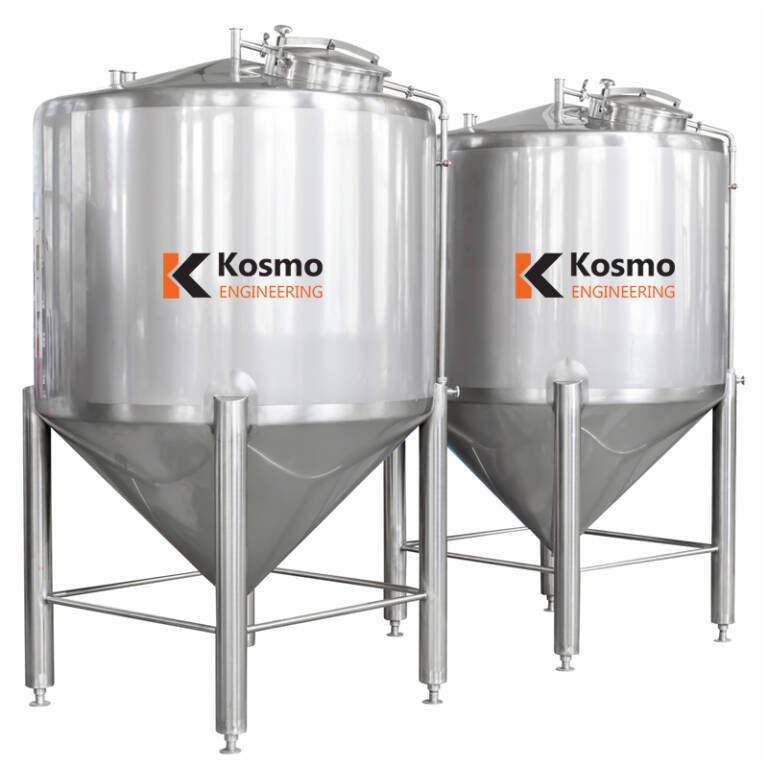
A common way to control cost is to make the parts that touch the product, such as the tank shell, agitator and pipework, in SS 316 and the frame and covers in SS 304.
How to make sure you get the grade you pay for
- Ask for the material test certificate (mill certificate) of the sheet used.
- Check that welds on contact surfaces are made with matching filler wire and are properly cleaned and passivated. See our TIG welding and stainless steel polishing services.
- Ask for the surface finish of contact parts; a smooth, polished finish is easier to clean and resists corrosion better.
Kosmo Engineering builds storage tanks, mixers and processing lines in SS 304 and SS 316 in S.I.T.E. Karachi. Not sure which grade your product needs? Contact us with your product details and we will advise.