Ribbon blenders and paddle mixers both mix dry powders in a horizontal trough, so buyers often treat them as the same machine. They are not. The agitator inside each one moves material differently, and that decides which products it handles well. This guide explains the difference so you can choose the right mixer for your product.
How a ribbon blender works
A ribbon blender has a shaft with two spiral ribbons, one inside the other. The outer ribbon pushes material towards one end of the trough while the inner ribbon pushes it back the other way. This counter-flow keeps the whole batch moving in a figure-of-eight pattern, which gives a uniform blend of free-flowing powders.
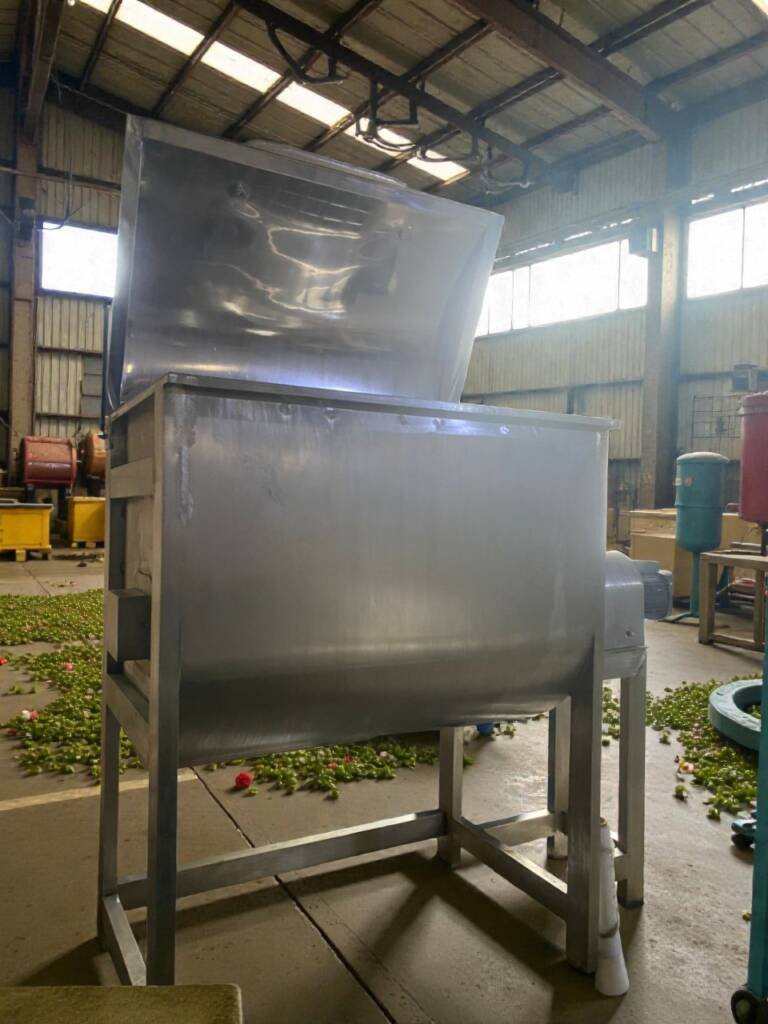
Ribbon blenders are the standard choice for:
- Spice blends, masala and seasoning powders
- Flour, premixes and bakery mixes
- Powdered milk, protein and nutrition blends
- Detergent, chemical and fertiliser powders
- Adding a small amount of liquid (oil, flavour, colour) to a powder through spray nozzles
How a paddle mixer works
A paddle mixer replaces the ribbons with angled paddles fixed to the shaft. The paddles lift and fold the material rather than pushing it along in a spiral. Because the action is gentler and more open, a paddle mixer handles products that a ribbon would damage or that would wrap around the ribbon.

Paddle mixers suit:
- Fragile products such as granules, flakes, cereals and coated particles
- Mixes with large differences in particle size or density
- Sticky, moist or paste-like materials
- Products where you add a larger share of liquid
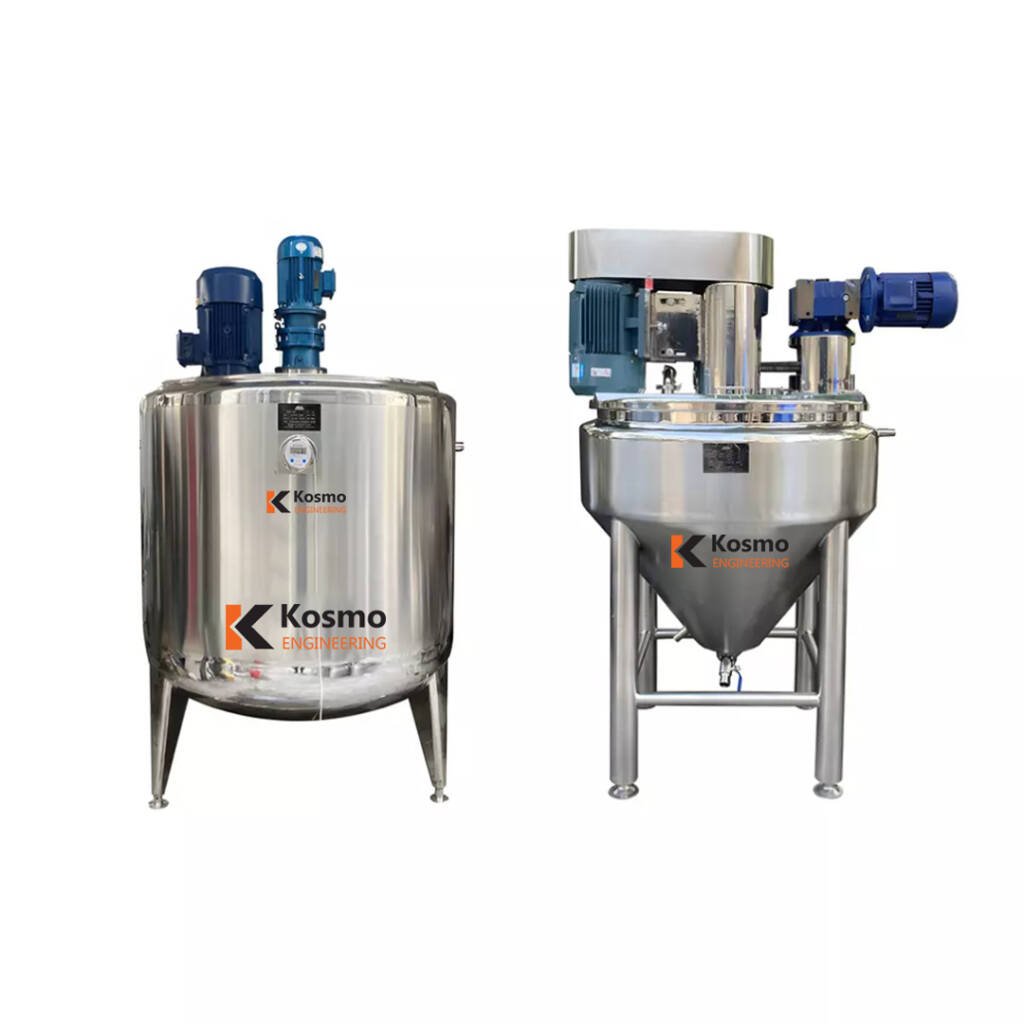
Kosmo Engineering builds a tilting paddle mixer, where the trough tilts forward to empty, and a dual shaft mixer with two counter-rotating paddle shafts for faster, more intensive mixing.
Ribbon blender vs paddle mixer at a glance
| Point | Ribbon blender | Paddle mixer |
|---|---|---|
| Best for | Free-flowing, fine powders | Fragile, mixed-size, sticky or moist products |
| Mixing action | Counter-flow spiral, fairly intensive | Lifting and folding, gentler |
| Effect on particles | Can break fragile granules | Keeps particles whole |
| Liquid addition | Small amounts | Small to larger amounts |
| Discharge | Bottom valve; some powder can stay behind | Bottom valve or tilting trough for near-complete emptying |
| Cleaning | Ribbons have more surfaces to clean | Open paddles are easier to clean |
Which one should you buy?
Choose a ribbon blender if your product is a dry, free-flowing powder and you want an even blend at a lower machine cost. Most spice, flour and powder packing units in Pakistan use one.
Choose a paddle mixer if your product is fragile, sticky or moist, if the ingredients differ a lot in size or weight, or if you change products often and need fast, thorough cleaning.
If you are not sure, test a sample. Tell us the product, batch size and how many batches you run a day, and we will recommend the mixer type and capacity.
Things to confirm before ordering
- Working capacity: mixers are filled to part of their total volume, so size the machine on your batch volume, not the weight alone.
- Material of construction: food products need stainless steel contact parts; see our guide on SS 304 vs SS 316.
- Discharge and cleaning: ask how the machine empties and how easily it can be washed between products.
- Motor and gearbox: check the drive is rated for your heaviest product, not just the lightest.
Kosmo Engineering designs and builds ribbon blenders and paddle mixers in S.I.T.E. Karachi. Contact us with your product details for a quote, or browse our ribbon blender mixers.