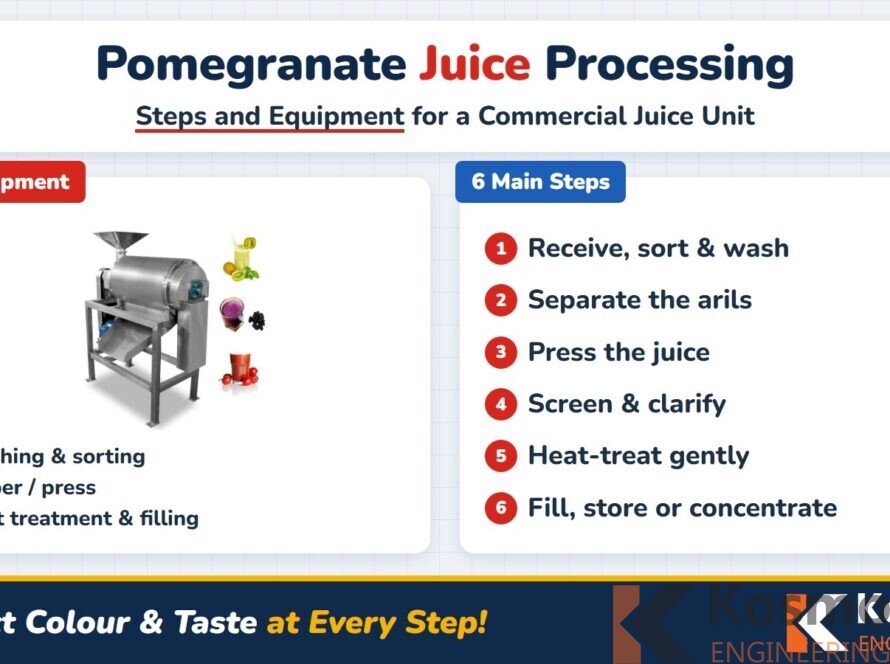
A juice or fruit pulp processing line follows the same basic path whatever the fruit: receive and wash the fruit, extract the pulp or juice, refine and blend it, heat-treat it for safety and shelf life, then fill, seal and store it. Setting up a line well means choosing a machine for each stage, sizing every machine to the same hourly capacity, and planning for the fruit season.
This guide explains each stage, the equipment involved, and the decisions that shape a practical juice plant in Pakistan.
The Stages of a Juice Processing Line
| Stage | What happens | Typical equipment |
| 1. Receiving and sorting | Fruit is weighed, inspected and damaged fruit removed | Inspection conveyor |
| 2. Washing | Dirt, residues and surface contamination removed | Brusher roller conveyor, washing tank |
| 3. Pre-treatment (some fruits) | Hot water treatment, blanching or softening | Mango hot water treatment plant |
| 4. Pulping or crushing | Flesh separated from seeds, stones and skin | Mango pulper destoner, apple pulper |
| 5. Refining | Pulp passed through finer screens for a smooth texture | Pulper-finisher or refiner |
| 6. Blending | Sugar, water, acid or other ingredients mixed in | Liquid mixing tank, high shear mixer |
| 7. Heat treatment | Product heated to make it safe and extend shelf life | Jacketed cooking kettle or pasteurizer |
| 8. Filling and sealing | Product filled into bottles, pouches, cans or drums | Piston filling machine |
| 9. Sterilization (canned products) | Sealed containers heat-treated | Retort machine |
| 10. Storage | Pulp or juice held before packing or dispatch | SS liquid storage tanks |
Not every plant needs every stage. A pulp unit selling to beverage companies in drums has a simpler line than a plant filling ready-to-drink juice into bottles.
Stage by Stage: What to Get Right
Washing
Clean fruit is the foundation of a safe product. Brusher roller conveyors scrub fruit as it turns and moves forward under water sprays, removing dirt that soaking alone leaves behind. For mango, a hot water treatment stage is common, especially for export quality.
Pulping and refining
This is the heart of the line. A pulper destoner separates flesh from the stone and skin. A finer refining screen then gives a smooth pulp with no fibres or specks. Screen sizes and rotor settings affect both texture and yield, so they should suit your fruit and your buyer’s specification.
Blending
Juice drinks, nectars and syrups need sugar, water and other ingredients mixed in evenly. A stainless mixing tank with an agitator handles most blending. A high shear mixer helps where powders such as sugar or stabilisers must dissolve quickly without lumps.
Heat treatment
Heat makes the product safe and stable. Small and medium plants often use jacketed kettles for batch heating. Larger continuous lines use pasteurizers. The right temperature and time depend on the product and packaging, and should be set with a food technologist.
Filling, sealing and sterilizing
Your packaging decides this stage. Bottles and pouches are typically hot-filled or filled after pasteurization. Canned pulp is sealed and then sterilized in a retort. Aseptic drums for bulk pulp need specialised aseptic filling equipment.
Capacity Planning: Size Every Stage to Match
The most common mistake in juice plants is a mismatched line, where one machine runs far below its capacity because the stage before or after it can’t keep up. To avoid it:
- Start from your daily fruit intake in kg or tonnes, and the hours you’ll run per day.
- Calculate the hourly capacity each stage must handle.
- Allow for yield. The weight of pulp or juice is always less than the weight of fruit, and yield varies with fruit and variety, so later stages handle less volume than the washing stage.
- Find the bottleneck, usually pulping or filling, and size it with a margin.
Plan for the Season
Mango, Pakistan’s main pulp fruit, has a short summer season, so a mango-only plant sits idle for much of the year. Plants that stay profitable often:
- Store pulp in bulk during the season and pack it through the year
- Process other fruits such as guava, apple, citrus or tomato in other months
- Use the same blending, heating and filling equipment for sauces or syrups, as covered in our ketchup and mayonnaise processing guide
Design the line so pulpers, screens and tanks can be adapted to more than one fruit.
Layout, Utilities and Hygiene
- One-direction flow: raw fruit enters at one end and finished product leaves at the other, with washing and raw areas kept apart from filling.
- Water: washing needs a large, reliable supply of clean water, plus drainage.
- Heat source: jacketed kettles and pasteurizers need steam, gas or electric heating. Steam needs a boiler, which affects space, cost and safety planning.
- Stainless steel contact parts: fruit acids corrode ordinary steel, so all product-contact surfaces should be food-grade stainless steel.
- Cleaning: plan time and equipment for cleaning at the end of every shift. Pulp left in pipes and tanks spoils quickly.
Frequently Asked Questions
What machines are needed for a small juice plant?
At minimum: a washing conveyor, a pulper or juice extractor, a mixing tank, a heating kettle or pasteurizer, and a filling machine. Canned products also need a retort.
Can one line process different fruits?
Often yes, with changes to screens, settings and pre-treatment. Mango, guava and apple can share much of the same blending, heating and filling equipment.
How do I choose the right capacity?
Work back from the fruit you can reliably buy each day during the season, the hours you’ll run and your expected yield. Then size every stage to match.
What is the difference between pulp and juice processing?
Pulp processing keeps the fruit flesh as a thick product, often sold in bulk to beverage makers. Juice processing goes further, blending or diluting the product and filling it into consumer packs.
Planning a Juice or Pulp Plant?
Kosmo Engineering manufactures juice and fruit processing machinery in Karachi, from washing conveyors and pulpers to mixing tanks, kettles and storage tanks. See a complete example in our mango pulp and juice processing line guide, browse our juice machinery, or share your fruit and daily capacity for a line proposal.