Commercial pomegranate juice is made in six main steps: washing and sorting the fruit, separating the arils (seeds) from the peel, pressing the juice, screening and clarifying it, heat-treating it for safety and shelf life, and filling it into bottles, pouches or bulk containers. Pomegranate needs more care than most fruits because its peel is bitter, and its deep red colour and fresh taste are easily damaged by too much heat.
Afghanistan, especially the Kandahar region, is known for high-quality pomegranates. Most of the crop is sold fresh, so processing into juice can add value, particularly for fruit that is too small or marked to sell well as fresh fruit.
Step 1: Receiving, Sorting and Washing
Fruit is weighed and inspected on arrival, and rotten or badly damaged fruit is removed. One bad fruit can spoil the taste of a whole batch. The fruit is then washed to remove dust, soil and residues. A brusher roller conveyor scrubs the fruit as it turns under water sprays, which cleans better than soaking alone.
Step 2: Separating the Arils
This is the step that makes pomegranate different. There are two approaches:
- Aril extraction (deseeding): the fruit is opened and the arils separated from the peel and white membrane before pressing. This gives a sweeter, cleaner juice with less bitterness.
- Whole-fruit pressing: the whole fruit, or halves, is pressed. This is faster and gives a higher yield, but the juice picks up tannins from the peel, making it more bitter and astringent.
Many producers aiming at premium juice extract the arils first. Aril extractors are specialist machines, so check with your supplier which stages of the line they can provide.
Step 3: Pressing
The arils are pressed to release the juice. Gentle pressing keeps the seeds intact, because crushed seeds add bitterness and oil to the juice. Belt presses and pneumatic or hydraulic presses are common at commercial scale.
Step 4: Screening and Clarification
Fresh-pressed juice contains pulp, seed fragments and fine particles. It’s first passed through screens or sieves to remove larger solids. After that, producers choose between two styles:
- Cloudy juice: lightly screened, keeping more body and natural character
- Clear juice: further clarified by settling, enzyme treatment and filtration, which gives a bright, transparent juice that stays stable on the shelf
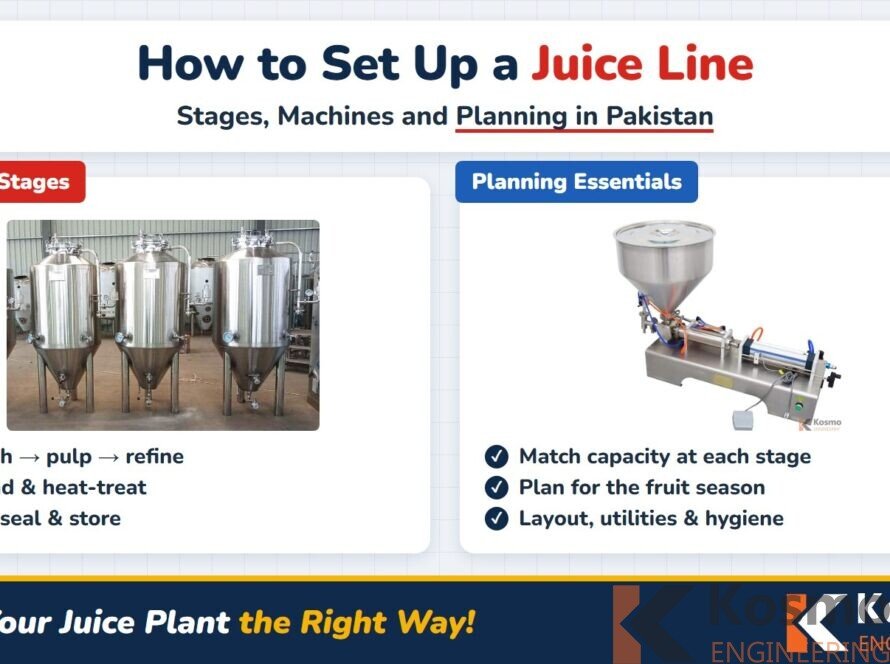
Juice is held and blended in stainless steel mixing tanks during these steps.
Step 5: Heat Treatment
Heat treatment makes the juice safe and extends its shelf life. Pomegranate’s red colour comes from natural pigments called anthocyanins, which fade and turn brown with too much heat. The aim is enough heat to make the juice safe, held for the shortest practical time, followed by quick cooling.
Small units often heat in batches using jacketed kettles, while larger plants use continuous pasteurizers. Exact temperatures and times should be set with a food technologist for your product and packaging.
Step 6: Filling, Storage and Concentration
Juice can be filled into bottles or pouches for local sale using a filling machine, or stored in stainless steel tanks before packing. For export and long-distance sale, many processors concentrate the juice to reduce its volume and transport cost. This needs evaporation equipment and is usually a later step once a plant is established.
Equipment Summary
| Stage | Equipment |
| Receiving and sorting | Inspection conveyor or sorting table |
| Washing | Brusher roller conveyor, washing tank |
| Aril separation | Aril extractor (specialist machine) |
| Pressing | Belt press, pneumatic or hydraulic press |
| Screening and clarification | Screens, settling and mixing tanks, filters |
| Heat treatment | Jacketed kettle or pasteurizer |
| Filling and storage | Filling machine, stainless steel storage tanks |
Planning Tips for a Pomegranate Juice Unit
- Season: pomegranate is harvested in autumn. To keep the plant busy, consider processing other fruits such as apple, grape or apricot in other months.
- Stainless steel everywhere: pomegranate juice is acidic and will attack ordinary steel, affecting both equipment and taste.
- Water and power: washing needs clean water, and presses, pumps and heating need reliable power. See our guide to planning a small food processing factory for power and layout basics.
- Hygiene: juice is a perfect food for microbes. Clean tanks, pipes and presses at the end of every shift.
For a wider view of juice lines, including pulping fruits like mango and apple, read our guide to setting up a juice processing line.
Frequently Asked Questions
Why does some pomegranate juice taste bitter?
Bitterness usually comes from the peel and white membrane, or from crushed seeds. Separating the arils before pressing, and pressing gently, gives a less bitter juice.
How much juice does a kilogram of pomegranate give?
Yield depends on fruit variety, ripeness and processing method. Whole-fruit pressing gives more juice than aril extraction but lower quality. Test with your own fruit before planning capacity.
Does heat treatment damage pomegranate juice?
Too much heat fades the colour and changes the taste. Using the minimum safe heat treatment and cooling quickly protects quality.
Can the same plant process other fruits?
Yes. Washing, tanks, heating and filling equipment can serve other fruits. Aril extraction is specific to pomegranate.
Planning a Fruit Juice Unit?
Kosmo Engineering manufactures washing conveyors, stainless steel tanks, kettles and filling equipment for juice and fruit processing. Visit our page for businesses in Afghanistan, browse our juice machinery, or tell us about your fruit and planned capacity.